
Contents
A broken display is by far the most common phone repair, and the easiest one to avoid. The only question is: tempered glass or film? The answer is clearer than many people think.
Tempered glass: the drop protection
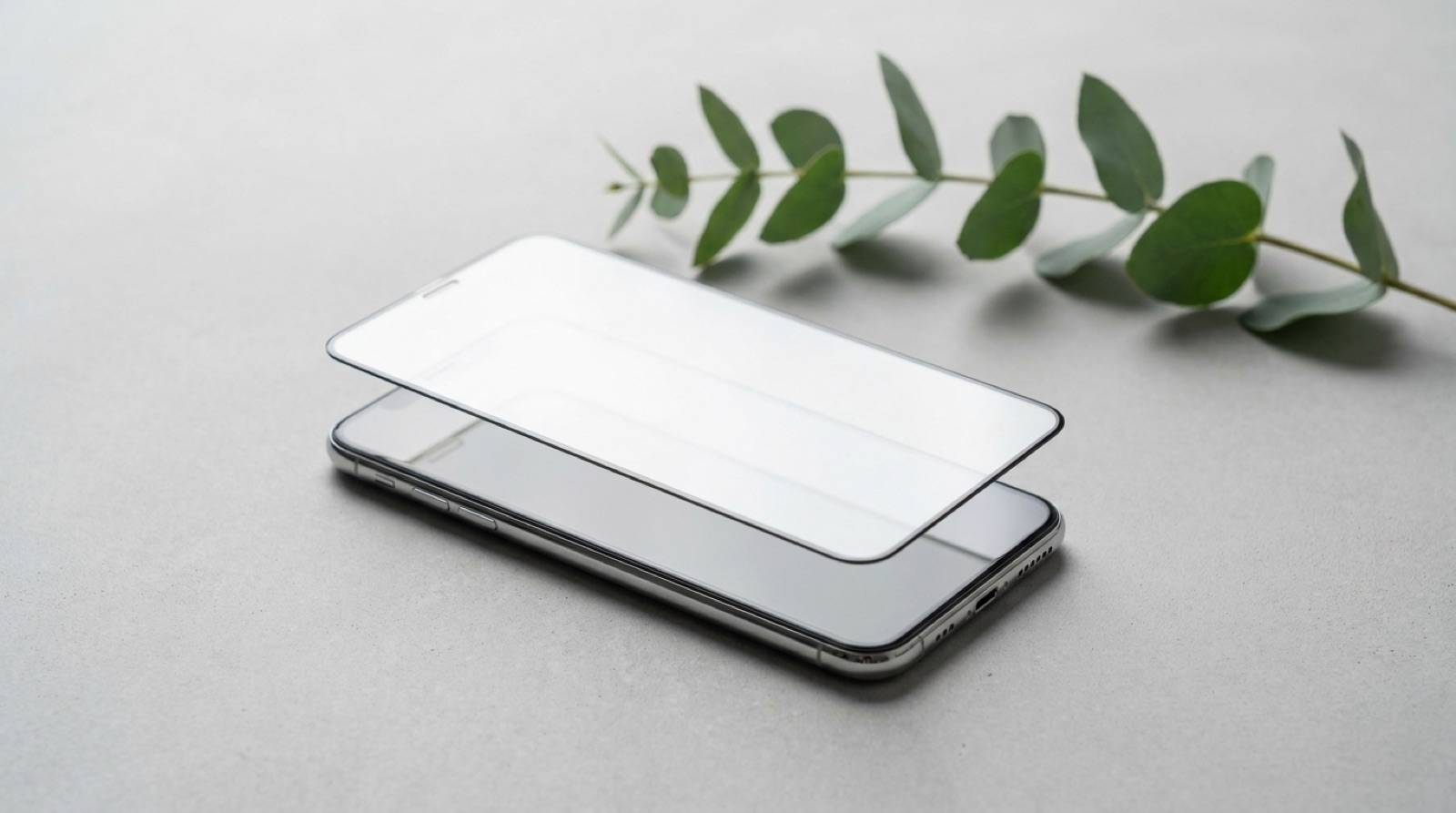
Tempered glass is 0.3 to 0.5 millimetres thick and plays the role of the sacrifice in an impact: it breaks so the display underneath stays intact. It also feels exactly like the original display, fingers glide identically, and image quality remains unchanged. Against scratches from keys and sand it is practically immune.
Film protector: the scratch protection
Plastic films are thinner, less noticeable and cheaper. They work well against micro-scratches, but in a drop onto an edge they offer barely any protection, the impact energy goes into the display almost unchecked. Their niche: curved displays where glass adheres poorly, and anyone who only wants scratch protection without any noticeable added thickness.
The head-to-head comparison
| Tempered glass | Film protector | |
|---|---|---|
| Drop protection | Good to very good | Barely any |
| Scratch protection | Very good | Good |
| Feel | Like the original | Slightly rubbery |
| Fitting | More demanding | Easier |
| Price | Slightly higher | Low |
The tempered glass variants
- Clear: the standard, invisible on the display.
- Matte: swallows reflections and fingerprints, ideal for outdoors, image slightly softer.
- Privacy: a privacy filter, seatmates on the train only see black.
- Camera protection glass: the often forgotten add-on, the protruding lenses are just as vulnerable to drops.
The underrated factor: the fitting
The best glass is of little use if it sits crooked or dust bubbles weaken the adhesion. In our stores in Basel, Bern and Solothurn we fit your tempered glass bubble-free and precisely aligned, in just a few minutes, on a properly cleaned display.
Verdict
For everyday use, tempered glass is the clear recommendation: real drop protection, original feel, a small price compared to the display replacement it prevents. Film remains the choice for special cases. And combined with a case with a raised lip, your device is ready for rough treatment, more on that in the guide How to protect your phone properly.
Frequently asked questions
Does tempered glass really protect against a broken display?
Does tempered glass affect touch or Face ID?
How often should you replace the tempered glass?
What does matte tempered glass do?
Related to this article
Instant quote in 2 minutes, payout within 24 hours after inspection. Or buy certified refurbished with a 1-year warranty and 14-day returns.