
Contents
The case is the cheapest component on your phone and still decides whether a drop ends harmlessly or costs you a display repair. Good protection is less a question of price than of construction.
The lip matters more than the material
The most common damage happens when the phone lands flat on its screen. What counts is therefore whether the case sits proud of the display at the front. A raised edge of one to two millimetres around the screen and around the camera lenses stops the glass from touching the ground at all. Cases that finish flush with the display look more elegant and protect exactly where it gets expensive.
Material: what works for what
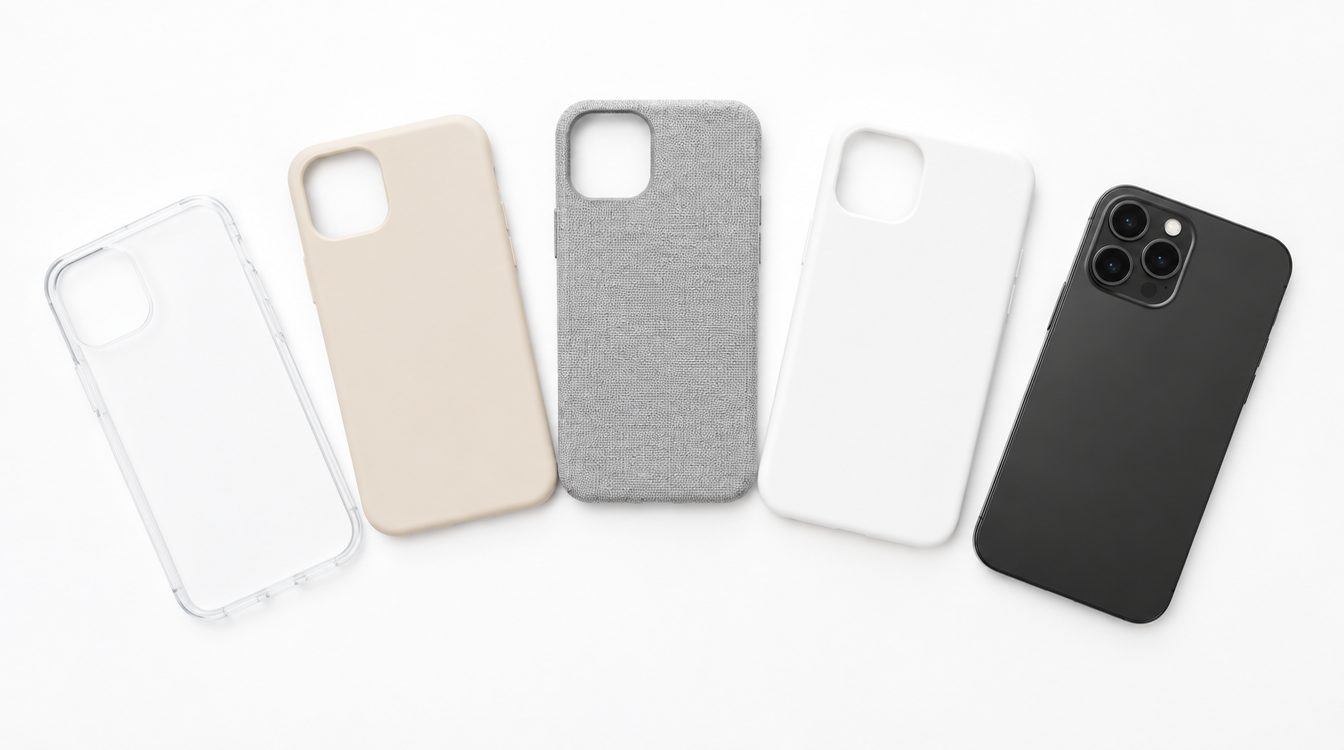
- Silicone: grippy and soft, absorbs impacts well. On the other hand it attracts dust and lint and loses its shape over time.
- TPU: the all-rounder. Flexible enough to absorb energy, more dimensionally stable than silicone. Clear TPU cases do yellow over time, which is normal and not a material defect.
- Hard case in polycarbonate: thin and rigid, but it gives very little in a drop and passes the energy on to the device. Best combined with a soft frame.
- Leather and faux leather: pleasant in the hand, protection rather moderate. A question of taste, not of safety.
How to spot real drop protection
Good drop cases combine a soft, shock-absorbing frame with a firmer back. Reinforced corners are not marketing but genuinely useful: almost every drop starts with an impact on a corner, and from there the energy travels into the glass. If a manufacturer states a tested drop height, that is a good sign, because it is a verifiable claim rather than an advertising word.
Case and tempered glass belong together
The case protects against drops, the tempered glass against scratches from keys and sand in your pocket. One does not replace the other. What matters is that the two fit together: a tempered glass that is wider than the cutout of the case lifts at the edges and comes loose. Our comparison tempered glass or screen film explains which option suits you. You will find matching glass under tempered glass.
Magnets, charging and thickness
If you want to use magnetic accessories, the case needs a built-in magnet ring, otherwise nothing holds. More on this in our article MagSafe explained. For wireless charging the rule is: up to around three millimetres of back thickness it usually works without trouble, while thicker outdoor cases and metal card slots can prevent it.
Conclusion
Buy the case for its lip, not for its colour: a raised edge at the front and around the cameras, a soft frame, reinforced corners. That costs little and is the cheapest insurance you can take out for your phone. You will find a selection under protective cases.
Frequently asked questions
Which case protects best against a broken display?
Why is my clear case turning yellow?
Do I also need tempered glass?
Does the case interfere with wireless charging?
Related to this article
Instant quote in 2 minutes, payout within 24 hours after inspection. Or buy certified refurbished with a 1-year warranty and 14-day returns.